
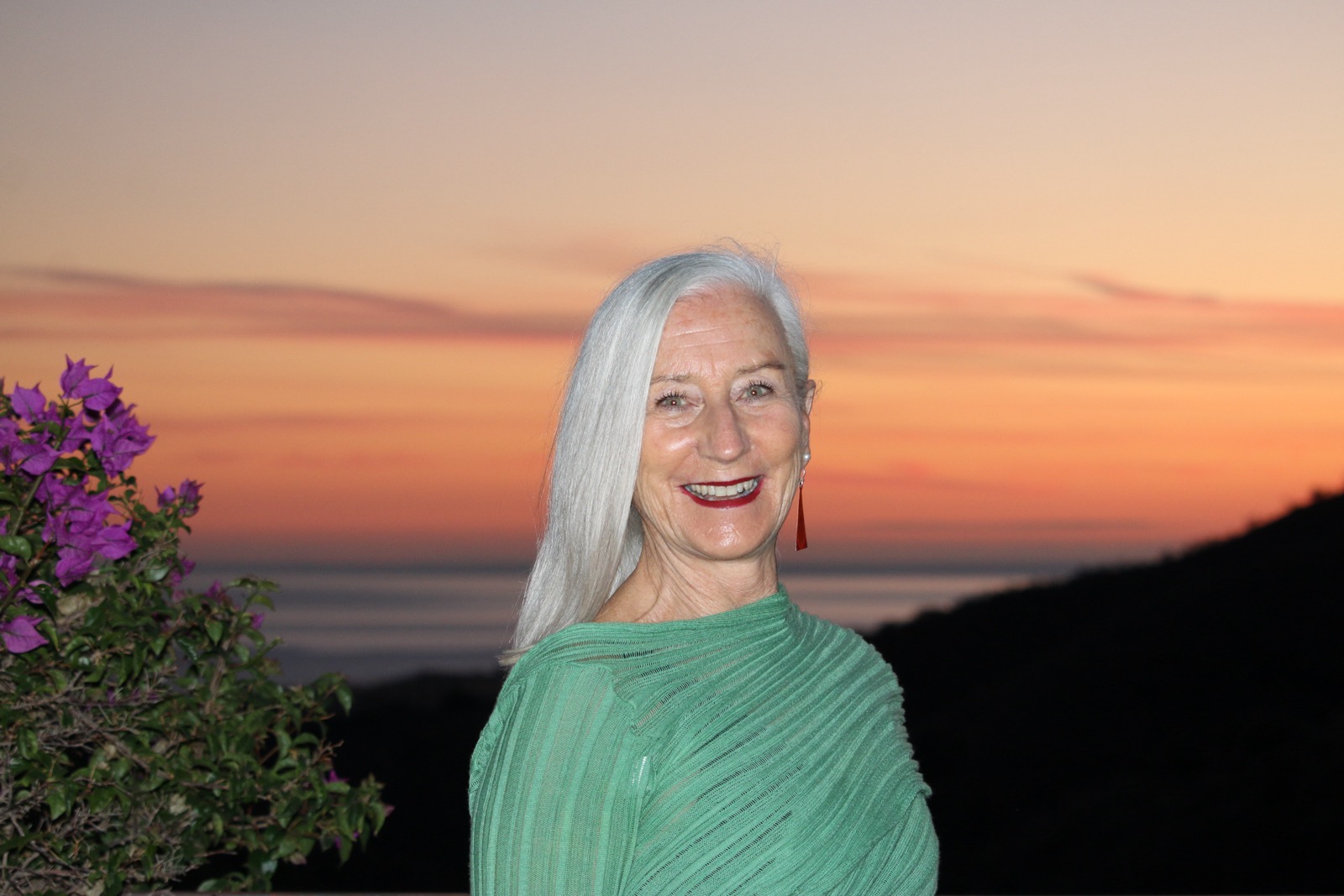
An artist who has spent more than four decades bringing dance into the heart of communities, hospitals and care settings across County Tyrone and beyond has been recognised in the 2026 New Year Honours List.
Carmel Garvey, an Arts Care Dancer in Residence and choreographer, has been awarded a British Empire Medal for services to dance in Tyrone, Northern Ireland. The honour recognises a lifetime of work dedicated not to stages or traditional performance spaces, but to people, many of whom are living with illness, disability, trauma or social isolation.
Originally trained in Laban, along with achieving a First Class Hons MA in Dance, Carmel’s career spans more than 40 years, during which dance has been the constant thread. Her work has reached children and older people, learning disability service users, people living with dementia, stroke survivors, mental health patients and hospital inpatients. For many of those she works with, dance has not been an optional extra but a lifeline, offering connection, dignity and joy in settings where these can be in short supply.
Reacting to the news of the award, said she is “proud” of the accolade and “grateful” of the people who have shaped her journey.
She said: “Words cannot express the privilege and pride I feel having been awarded this incredible accolade. It is just beyond my dreams.
“Over the past 40 years my work and the people I have danced with, young and old, have brought me great joy and I have been very privileged to do the work I do.
“Dance is a wonderful tool to cross all barriers, embracing inclusive practice and overall health and wellbeing.”
Carmel’s roots in Tyrone run deep. After moving to Castlederg, she began teaching dance to children through classes called Bright Sparks, which catered for young people aged between four and 16. The classes focused on dance and performing arts and staged two performances each year, quickly becoming a fixture in the local community.
Alongside her work with children, she re-established adult creative dance and fitness classes. From these sessions grew the Castlederg Creative Dance Team, a group that went on to compete nationally. The team achieved the title of UK Champions in Creative Dance for three consecutive years and later performed at the Royal Albert Hall in London, an extraordinary achievement for a group rooted in a small Tyrone town.
Castlederg’s position as a border town also shaped the direction of Carmel’s work. She became involved in cross-border projects alongside Border Arts and the Arts Council in Belfast, bringing together schools from both sides of the border. These projects included special and mainstream schools, primary and secondary pupils, older people’s groups and adults with learning disabilities. All levels of ability were represented, including wheelchair users.
Children danced alongside older people and adults with disabilities, learning through experience about inclusion, support and togetherness. Carmel described these projects as an opportunity to cross barriers and to show that dance could belong to everyone, regardless of age, background or physical ability.
It was through this work with Border Arts that the Inclusion Dance Company was formed. The company was made up of learning disability service users, staff and volunteers from Glenside Day Centre in Strabane. Inclusion Dance went on to perform at high-profile medical and healthcare events across Northern Ireland, carrying a message of visibility and inclusion into spaces where people with learning disabilities were rarely seen on stage.
Carmel’s relationship with health and care settings deepened further through her work with Arts Care. For the past 16 years she has worked as a Dancer in Residence within the Western Health and Social Care Trust, delivering sessions across Omagh, Strabane, Derry and Enniskillen, as well as Lisnaskea. Her work has taken place in day centres and hospital wards, engaging people living with mental health conditions, addiction, dementia, stroke and learning disabilities, as well as older people.
Her sessions combine dance, fitness, yoga and relaxation, with a focus on health and wellbeing. Each session is adapted to the group and the individual, allowing participants to engage safely, comfortably and at their own pace. Music is chosen carefully, often reflecting the era of the participants, encouraging memory, reminiscence and participation
Carmel has also worked extensively within the Belfast Health and Social Care Trust, bringing groups into the dance studio at Knockbracken Healthcare Park where possible, giving inpatients the chance to leave the ward and experience movement in a creative space. In good weather, sessions move outdoors, using the natural environment as part of the experience.
Her training spans dance, fitness, yoga, performing arts, meditation and relaxation, all of which are woven together into programmes designed to be engaging, varied and safe. The benefits of this approach are seen not only in improved mobility, balance and coordination, but in lifted spirits, social connection and increased confidence among participants.
One long-running strand of her work has been with Arts Care dance companies, including the ETC Dance Group, which meets weekly at Knockbracken. Made up of dancers from Orchardville and Morton Day Centres, the group focuses on Laban dance principles and creative movement, working towards themes that allow dancers to collaborate in pairs or small groups. Carmel said she feels a great sense of pride in the group and is delighted by the pride they feel in themselves, as they deliver messages of inclusion and diversity through performance.
Beyond trusts and hospitals, Carmel has maintained strong links with community organisations. She is a dance facilitator with the Pushkin Trust at Baronscourt Estate, a charity that uses creative arts and the natural environment to promote imagination and cross-community engagement among young people. There, she creates dance alongside writers, poets and musicians, drawing on themes such as landscape and source, and using the estate’s environment as inspiration for choreography. She has described these projects as creating memories that children will carry with them for life.
Her commitment to community health and wellbeing was also evident in Let the Dance Begin, a six-year Arts Care and Pushkin Trust project that brought together community groups, schools, older people, adults with learning disabilities and mental health service users. Dance, art, music and writing were all woven into the programme, alongside education, health and local businesses. At the culmination of the project, Carmel directed and produced a large-scale performance at the Alley Theatre in Strabane, showcasing dance, poetry and music as a united voice.
More recently, her Here and Now facilitation for Arts Care has focused on intergenerational work in County Tyrone, bringing together primary school children and older people with learning disabilities to create choreography centred on inclusion, support and togetherness. At Castlederg Healthy Living Centre, she worked with a group of women known as the Derg Divas, creating choreography that was performed at a Here and Now showcase in Belfast. She is due to return to the group to continue the work, focusing on creative Laban dance principles.
Throughout her career, Carmel’s approach has remained consistent. Dance is not about steps or technical perfection, but about meeting people where they are and offering them a way to connect. In her sessions, a raised hand, a shared rhythm or a simple gesture can be enough to participate. Those in wheelchairs, those seated, and those standing are all dancers, each contributing in their own way.
Arts Care chief executive Barry Macauley said the award was richly deserved.
He said: “I am so delighted for Carmel and I can think of no one more deserving. It comes as no surprise to us at Arts Care, given the amazing contribution she has made to the lives of vulnerable people over the years through dance and movement.
“There will be so many members and staff of day care facilities, hospital wards, residential care homes, schools and community groups throughout Northern Ireland, who will be genuinely overjoyed by this wonderful news and the recognition for Carmel.”
Colleagues and families have long spoken about the impact of Carmel’s work. Participants often show immediate lifts in mood during sessions, with calmer atmospheres and increased social interaction afterwards. Over time, many build confidence, rediscover aspects of their identity and find ways to express emotions that may be difficult to put into words.
One example highlighted in Arts Care documentation is Martin, a long-term dancer who has worked with Carmel for more than two decades. Before he began working with Carmel, his family didn’t realise dance was missing from his life. Now it is central to his identity. Over the years, Carmel has supported Martin to grow in confidence, to the point where he now leads other participants, welcoming newcomers, teaching sequences he has created, and helping others feel at home.
In performance, Martin takes great pride in his role, often stepping forward with a sense of excitement and joy. For his family, the transformation has been remarkable – they describe the pride he feels, the buzz of anticipation before each session, and the lasting joy he carries home afterwards.
Perhaps most movingly, Carmel gave Martin a way to express deep personal emotion at a time of grief. After his father passed away, Martin struggled to put his feelings into words. But in one of Carmel’s sessions, he chose to dedicate a dance to his dad. Through movement, he was able to honour his father and share his emotions with others – something that would not have been possible otherwise. That moment revealed not just the therapeutic power of dance, but also Carmel’s unique ability to create safe, creative spaces where emotions can be explored and expressed with dignity.
Through dance, Carmel creates opportunities for those she works with through expression, connection and pride that might otherwise be lost in the routines of healthcare or the limitations of illness and disability. Her practice doesn’t just improve wellbeing on paper – it changes how people feel about themselves and how they are seen by their families, carers and communities.
Carmel’s impact extends far beyond one individual. In care homes, her sessions have calmed agitation, lifted moods, and created friendlier, more connected atmospheres. Staff often report that residents are more settled and sociable after taking part. Families see their loved ones smile, sing or reach out in ways they haven’t for months. In hospital wards, her sessions offer children distraction from pain and anxiety, while in mental health settings, they provide a gentle and empowering way to reconnect with the body.
What makes Carmel’s difference so powerful is that it is both immediate and lasting. In the moment, she brings laughter, music and movement that transforms the atmosphere of a room. Over time, she builds confidence, resilience and belonging. She doesn’t just offer dance as an activity – she offers it as a language, a tool for connection, and a pathway to self-worth.
For Carmel, these moments are at the heart of her work. She has consistently described her role as a privilege, shaped by the people she works with rather than by personal ambition or recognition. Whilst she acknowledges the British Empire Medal may bear her name, she believes it also reflects the thousands of individuals across Tyrone and Northern Ireland whose lives have been touched by her belief that dance belongs to everyone.
As her work continues in County Tyrone and beyond, the honour serves as national recognition of a local artist whose quiet, sustained commitment has transformed ordinary rooms into spaces of connection, creativity and dignity.